

The Formula for Better Email Engagement

Email marketing continues to be one of the most effective digital marketing channels in 2026. Despite the rise of social media and instant messaging platforms, email remains one of the strongest ways to connect with customers, build trust, and drive conversions.
However, many businesses struggle with low open rates, poor click-through rates, and declining engagement. Sending more emails is not the solution. The real answer lies in understanding the formula for better email engagement.
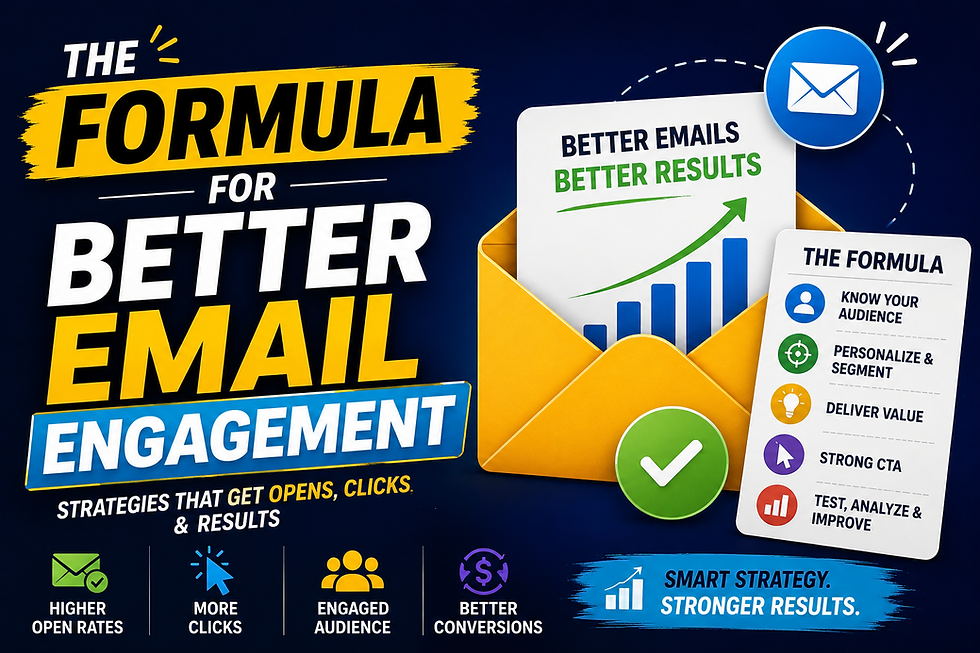
Successful email marketing is not random, it follows a strategic process designed to attract attention, provide value, and encourage action.
Why Email Engagement Matters
Email engagement measures how people interact with your emails.
Key indicators include:
Open rates
Click-through rates
Replies
Conversions
Unsubscribe rates
Higher engagement means your audience finds your emails valuable and relevant.
Low engagement often signals poor targeting, weak messaging, or lack of personalization.
Step 1: Start with Strong Subject Lines
The first thing people see is the subject line.
If it does not grab attention, the email will never be opened.
Weak examples:
Monthly Newsletter
Update from Our Company
Better examples:
Your Marketing Strategy Might Be Missing This
Why Your Leads Are Not Converting
Tips for stronger subject lines:
Create curiosity
Focus on benefits
Keep it short and clear
Avoid spam-like language
The subject line determines whether your email gets attention.
Step 2: Personalize the Experience
Generic emails often feel irrelevant.
Customers expect personalized communication.
Personalization strategies:
Use the subscriber’s name
Segment audiences by interests
Recommend relevant content or offers
Relevant emails improve engagement significantly.
Step 3: Deliver Real Value
People open emails for one reason, they expect value.
Valuable email content includes:
Helpful insights
Industry updates
Actionable tips
Exclusive offers
If every email feels promotional, subscribers will lose interest.
The best email marketing balances education and promotion.
Step 4: Write Better Email Copy
Email copy should be easy to read and focused.
Common mistakes:
Long paragraphs
Too much information
Weak messaging
Better approach:
Keep sentences short
Use clear structure
Focus on one key message
Good copy improves readability and engagement.
Q&A Section
Q1: Why are my email open rates low?
Low open rates are often caused by weak subject lines, poor timing, or irrelevant messaging.
Q2: How often should businesses send emails?
Consistency matters more than frequency. Send emails regularly without overwhelming subscribers.
Q3: What type of emails get the most engagement?
Educational, personalized, and value-driven emails usually perform better than overly promotional content.
Step 5: Include a Clear Call-to-Action
Every email should have a purpose.
Ask yourself: What action should the reader take?
Examples of strong CTAs:
Learn More
Get Your Free Guide
Book a Consultation
Read the Full Blog
Avoid confusing readers with multiple competing actions.
Step 6: Segment Your Audience
Not every subscriber wants the same content.
Segment based on:
Interests
Purchase history
Customer behavior
Industry
Segmentation improves relevance and engagement.
Step 7: Optimize Email Timing
Timing affects performance.
Sending emails at the wrong time reduces visibility.
Best practice:
Test different days and times to understand when your audience engages most.
Data-driven testing leads to better results.
Step 8: Focus on Mobile Optimization
Most emails are opened on mobile devices.
Common mistakes:
Large text blocks
Poor formatting
Hard-to-click buttons
Solution:
Design emails for mobile-first readability.
Better user experience improves engagement.
Step 9: Test and Improve Continuously
Email marketing requires constant optimization.
Test elements like:
Subject lines
Email design
CTA wording
Send times
Small improvements can dramatically improve performance over time.
Common Email Engagement Mistakes
Sending too many emails
Ignoring personalization
Writing weak subject lines
Overloading emails with promotions
Not tracking performance
Avoiding these mistakes improves engagement and retention.
The Role of Strategy in Email Marketing
Better email engagement comes from strategy, not luck.
Businesses often use marketing services to improve email campaigns, automate communication, and optimize performance.
For those searching for a marketing agency near me or the best marketing agency in Hyderabad, a strong email strategy can help improve engagement and customer retention.
The Future of Email Marketing
Email marketing is evolving with:
AI-powered personalization
Smart automation
Predictive content recommendations
Behavioral targeting
Businesses that adapt to these changes will see stronger engagement and higher ROI.
Final Thoughts
Better email engagement is not about sending more emails, it is about sending smarter emails.
To improve engagement:
Write better subject lines
Personalize content
Deliver value consistently
Segment your audience
Optimize for mobile
The brands that focus on relevance and value will continue to win attention in crowded inboxes.
About RA Services
RA Services provides marketing services focused on email marketing, automation, and customer engagement strategies. The goal is to help businesses improve communication, increase conversions, and build stronger customer relationships.
For businesses looking for a marketing agency near me or the best marketing agency in Hyderabad, RA Services offers solutions designed to drive measurable growth.
Explore More Services
Have Questions?
📩 info@raconsultingservices.in 📞 +91 95730 64713


Comments